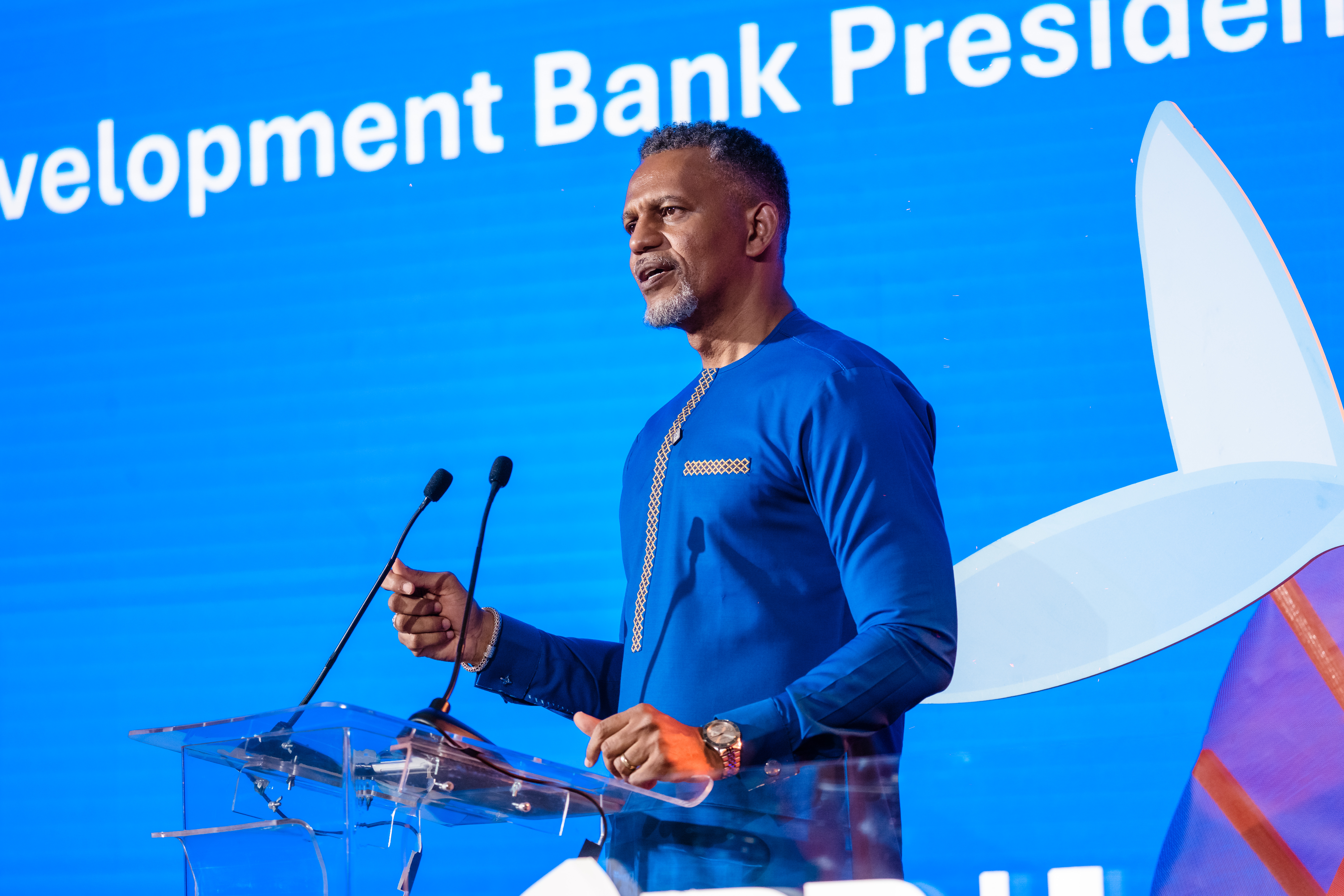
The Caribbean must fundamentally change how it finances development and climate resilience or risk remaining trapped in a cycle of debt, weak growth and increasing climate shocks, according to Caribbean Development Bank President Daniel Best.
Speaking at the IDB Invest Sustainability Week 2026 forum, Best warned that the region faces gross financing needs of US$65.2 billion over the next decade while mobilising less than 10 per cent of the approximately US$14 billion required annually to prepare for climate-related challenges.
“The result is a difficult cycle,” Best said. “Debt servicing crowds out investment, investment constraints limit growth, and limited growth reinforces fiscal vulnerability.”
He said Caribbean countries continue to face high debt levels, limited fiscal space and repeated external shocks ranging from hurricanes to global economic volatility, all while borrowing costs remain elevated.
According to Best, the region’s vulnerability is becoming increasingly apparent as climate-related disasters intensify. He noted that the Caribbean has experienced five Category 5 hurricanes in the past eight years.
“Climate risk is not a future threat, but a present reality,” he said.
Addressing government officials, investors and development partners, Best argued that greater private sector involvement will be essential if the region is to build more resilient economies.
“Across our region, the private sector is not simply a beneficiary of development—it is a primary driver of growth, employment, and productivity,” he said. “If we are serious about building resilient economies, then the private sector must be enabled, incentivised, and financed to lead that transformation.”
Best highlighted the Multi-Guarantor Debt-for-Resilience Swap as one example of the innovative financing mechanisms needed to help countries reduce borrowing costs while creating fiscal space for critical investments.
The initiative seeks to bring together multiple guarantors to lower financial risk and free up resources that governments can redirect towards climate adaptation, disaster preparedness, healthcare and other development priorities.
“This is not debt relief for its own sake,” Best said. “It is debt transformation—turning liabilities into opportunities, and obligations into investments in people, communities, and futures.”
He also pointed to the Caribbean Development Bank’s efforts to expand blended finance, guarantees, co-financing partnerships and support for entrepreneurship as part of a broader push to improve the region’s investment climate.
Best concluded by urging governments, investors and development institutions to move beyond discussion and take concrete action.
“The global environment is uncertain and volatile,” he said. “And the reality is clear: no one is coming to rescue us. The responsibility rests with us—our institutions, our partners, and our people—to act collectively, to act boldly, and to act now.”
Leave a Reply