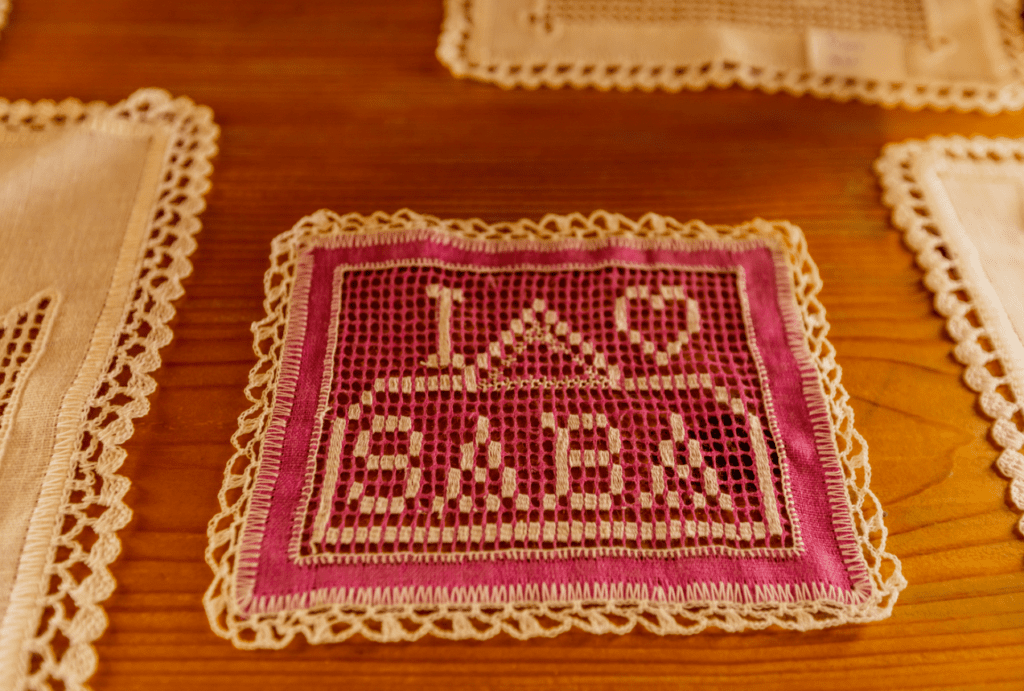
Small islands in the Caribbean are no strangers to resourcefulness, and Saba is a prime example.
In the late 19th and early 20th centuries, many men left the island to work at sea, leaving women to find ways to support their families.
Their solution was both creative and profitable…lace-making.
The intricate craft, later known as Saba Lace or Spanish Work, transformed the island’s economy and earned it the nickname “The Island of Lace.”

The tradition began when Mars Gertrude Hassell Johnson brought the technique home from a convent school in Caracas, Venezuela.
She taught a handful of women, and a cottage industry was born.
Initially, women produced the delicate lace at home while men sold it during trips to nearby islands.
The business took off when regular mail service connected Saba to the wider world in 1884.
Without established buyers, the women wrote letters to merchants overseas, offering their handmade products.
Their persistence paid off, and soon Saba Lace was being shipped internationally.
Its reputation for high quality fuelled a thriving mail-order business.
By the 1950s, sales to the United States alone brought in over US$15,000 each year, a remarkable sum for the tiny island.
At the height of the industry, more than 250 women were involved in lace-making. Each artisan developed her own patterns, which were passed down through generations and adapted over time to meet changing tastes.
Eventually, the demand for Saba Lace declined as the island shifted its focus to eco-tourism and education. Yet the craft has not disappeared. Today, a small group known as the Lace Ladies continues the tradition, selling everything from baby bibs and pillows to ornaments and doilies online. Every piece reflects both skill and pride, connecting modern buyers to a rich cultural heritage.
The story of Saba Lace has also been captured in books.
Eric Eliason’s “The Fruit of Her Hands: Saba Lace, History & Patterns” offers a detailed history of the craft and preserves patterns that might have otherwise been lost.
His follow-up, “The Island of Lace,” highlights the cultural and economic importance of lace-making on Saba, featuring over 300 photographs of the remaining lace artisans.
For visitors to Saba, purchasing a piece of lace is more than a souvenir.
It’s a chance to support a centuries-old tradition and honour the ingenuity of the women who turned a small island into a centre of craftsmanship recognised around the world.



Leave a Reply