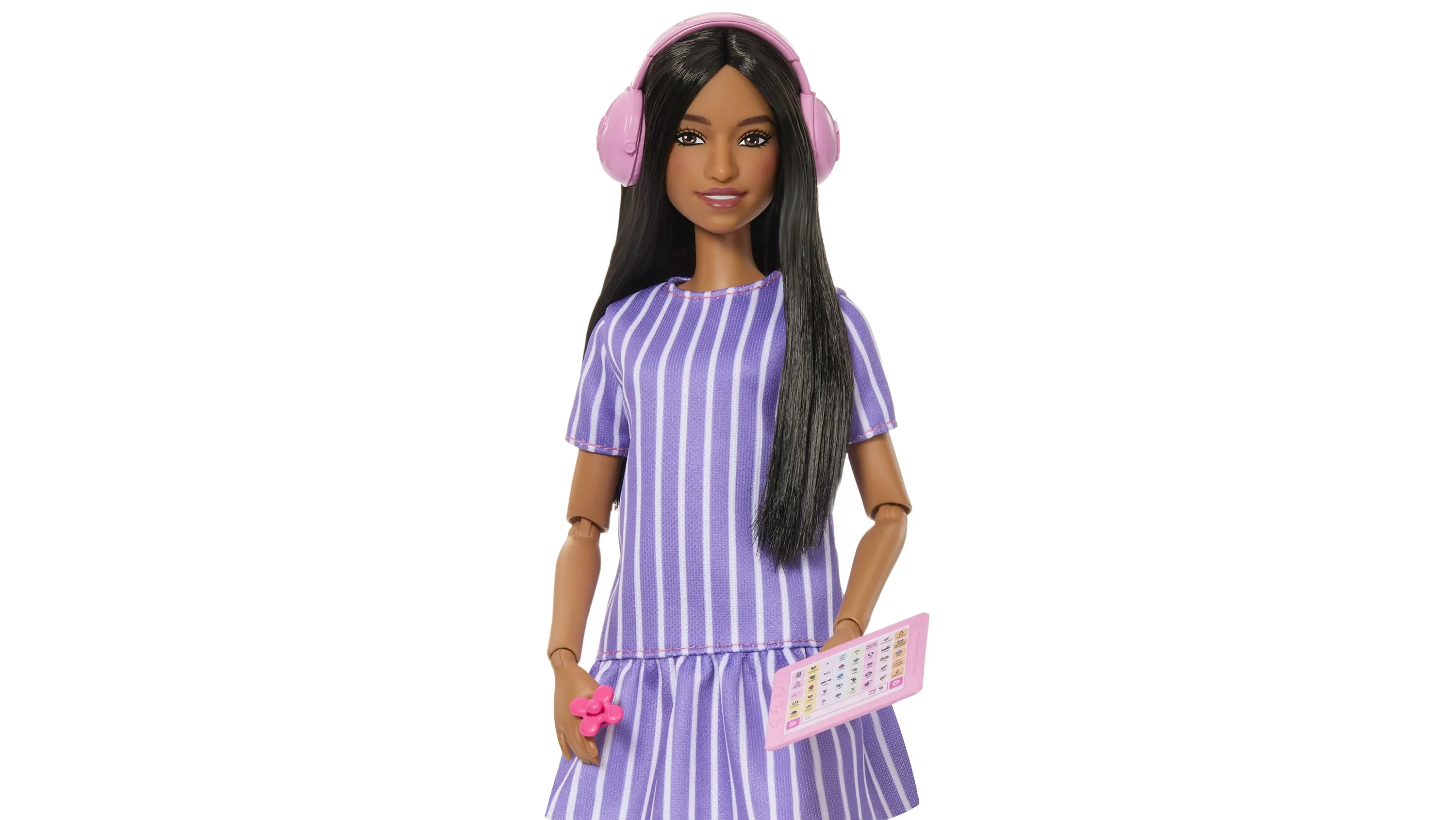
Mattel has unveiled its first-ever autistic Barbie doll, marking a milestone in the company’s efforts to expand representation and inclusion within its iconic toy line.
The doll was developed over more than 18 months in partnership with the Autistic Self Advocacy Network (ASAN), a nonprofit disability rights organisation run by and for autistic people. It joins the Barbie Fashionistas collection, which features dolls representing a wide range of skin tones, body types, medical conditions and disabilities.
According to Mattel, the autistic Barbie was designed to reflect some of the ways autistic individuals may experience and interact with the world. Jamie Cygielman, Global Head of Dolls at Mattel, said the launch aligns with Barbie’s long-standing goal of reflecting children’s lived experiences.
“Barbie has always strived to reflect the world kids see and the possibilities they imagine, and we’re proud to introduce our first autistic Barbie as part of that ongoing work,” Cygielman said. “The doll, designed with guidance from the Autistic Self Advocacy Network, helps to expand what inclusion looks like in the toy aisle and beyond because every child deserves to see themselves in Barbie.”

The doll includes several design features informed by consultation with ASAN. These include articulated elbows and wrists to allow for hand movements associated with stimming, a slightly averted eye gaze to reflect how some autistic people avoid direct eye contact, and a range of accessories designed to support sensory and communication needs.
Accessories include a pink finger-clip fidget spinner, noise-cancelling headphones and a tablet displaying symbol-based Augmentative and Alternative Communication (AAC) apps. The doll also wears a loose-fitting purple dress and flat shoes designed to reduce sensory discomfort and promote ease of movement.
Colin Killick, Executive Director of ASAN, said the organisation was proud to collaborate on the project.
“As proud members of the autistic community, our ASAN team was thrilled to help create the first-ever autistic Barbie doll,” Killick said. “It is so important for young autistic people to see authentic, joyful representations of themselves, and that’s exactly what this doll is.”
As part of the launch, Barbie partnered with autism advocates and creatives to share personal stories and reactions to the doll, including autism advocate Madison Marilla, who described the doll as a meaningful form of representation.
“This autistic Barbie makes me feel truly seen and heard,” Marilla said. “I hope all the kids I’ve mentored feel the same when they see her, and I hope people who aren’t autistic feel educated and gain a better understanding of autism when they see this doll.”
Mattel said the release builds on broader research into the benefits of doll play. Studies conducted with Cardiff University have found that doll play activates areas of the brain associated with empathy and social processing, with findings suggesting potential benefits for children with neurodivergent traits.
To mark the launch, Barbie will donate more than 1,000 autistic Barbie dolls to pediatric hospitals across the United States that provide specialised services for children on the autism spectrum.
The autistic Barbie doll is now available for purchase through the Mattel Shop and major retailers.
Leave a Reply