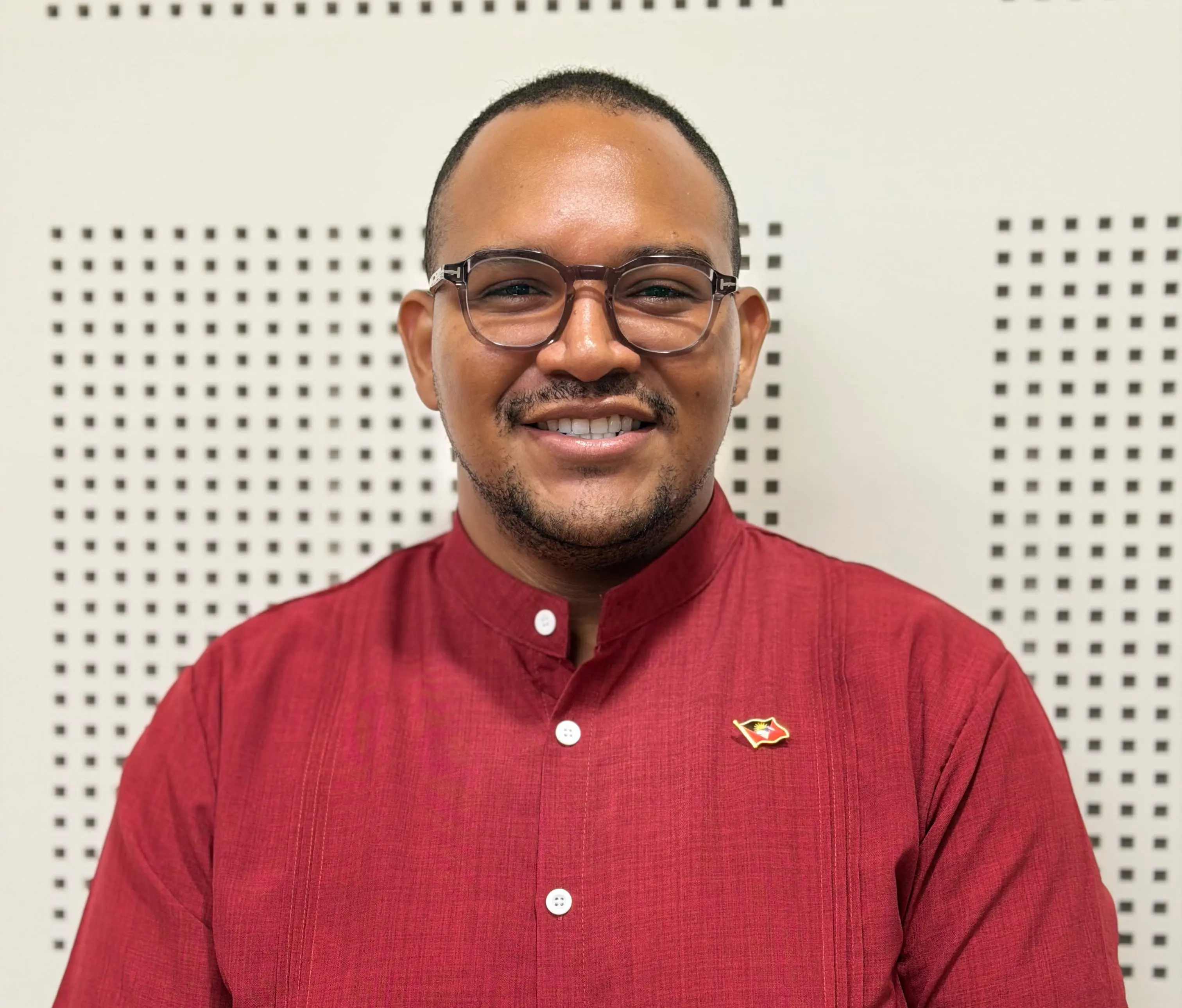
ST JOHN’S, Antigua and Barbuda — Antiguan registered nurse and public health practitioner Julien Kentish is calling for a broader approach to healthcare leadership in the Caribbean, arguing that stronger health systems will depend on prevention, climate resilience, youth participation and better use of research.
Kentish made the call as Caribbean leaders, policymakers and young people gather in Antigua and Barbuda for the 2026 Commonwealth Heads of Government Meeting (CHOGM), where discussions include the region’s development priorities and the challenges facing Small Island Developing States from November 1 to 4.
Participating as a delegate in the Commonwealth engagement surrounding the meeting, Kentish said healthcare must be viewed beyond the work carried out in hospitals and clinics. He believes governments need to pay greater attention to the social, economic and environmental conditions that shape people’s health.
One of the region’s pressing concerns, he said, is the growing burden of non-communicable diseases (NCDs), including diabetes, cardiovascular disease, cancer and obesity.
While investment in hospitals and specialist treatment remains important, Kentish believes greater emphasis must be placed on preventing illness through healthier lifestyles, early intervention and stronger public health programmes.
“Healthcare cannot be measured only by the number of patients treated or the services provided within our hospitals. We must also examine how effectively we prevent disease, promote healthier lifestyles, identify risks early and create environments in which people have a genuine opportunity to live healthier lives,” he said.
His interest in prevention extends to maternal and child health.
Kentish’s postgraduate research at the Hebrew University of Jerusalem’s Braun School of Public Health and Community Medicine examined the knowledge, attitudes and practices of healthcare workers and caregivers around healthy family feeding during the first 1,000 days of life, from pregnancy to a child’s second birthday.
He said this period offers an important opportunity to establish healthy habits and reduce the risk of chronic illnesses later in life.
The issue is particularly relevant across Latin America and the Caribbean, where UNICEF’s 2025 Child Nutrition Report highlighted the prevalence of overweight among children.
Kentish believes governments must do more to equip parents, caregivers and healthcare professionals with accessible, culturally appropriate guidance on nutrition.
“By the time a person develops diabetes, hypertension or another chronic condition, many of the contributing risk factors may have been present for years. We have to become more intentional about prevention from pregnancy, infancy and early childhood,” he said.
He also sees scope for greater regional cooperation in maternal and child health, breastfeeding support, nutrition education and primary healthcare, with research helping to shape policies that reflect local needs.
Climate change is another issue he wants to see more firmly integrated into Caribbean health planning.
Kentish said hurricanes, extreme heat, flooding and drought can disrupt essential services and threaten food and water security, with vulnerable groups particularly exposed.
He argued that climate resilience must include preparing hospitals and health centres to remain operational during emergencies, equipping healthcare workers to respond to climate-related health threats and strengthening systems to monitor emerging risks.
“The conversation about climate resilience must include the health sector,” he said. “We can build climate strategies, discuss environmental protection and negotiate international commitments, but we must also ask whether our hospitals are prepared, whether our healthcare workforce is equipped and whether our communities can maintain access to essential health services when disasters occur.”
Kentish pointed to the Caribbean Action Plan on Health and Climate Change 2026–2031 as an important regional framework, but said its priorities must be backed by investment, institutional accountability and practical implementation.
He also called for young people to have a greater role in shaping health and development policies, rather than being treated only as beneficiaries of programmes.
Drawing on his humanitarian and community development work with the Antigua and Barbuda Red Cross Society, Kentish said youth involvement can support health promotion, mental health initiatives, climate action and community preparedness.
“Young people must be given opportunities to contribute meaningfully to the decisions that shape their future. We cannot consistently speak about youth empowerment while limiting young people to the role of observers,” he said.
He believes the region must also invest in developing future healthcare leaders, particularly as small states work to retain skilled professionals and strengthen institutional capacity.
For Kentish, this means broadening the role of healthcare professionals beyond frontline service delivery to include policy development, research, quality improvement and organisational leadership.
He also highlighted the potential of digital health systems to improve patient information management, disease surveillance and coordination between healthcare providers.
However, he cautioned that technology must be supported by proper governance, data protection and workforce training.
“Technology is only valuable when it improves the experience and outcomes of patients,” he said.
“We must be intentional about how we introduce innovation, ensuring that it addresses real healthcare challenges rather than becoming another system that institutions struggle to maintain.”
Kentish’s professional background spans clinical nursing, public health, healthcare administration, humanitarian service and corporate governance.
He said the combination has shaped his view that effective healthcare requires an understanding of both individual patient needs and the systems responsible for delivering services.
“Nursing gave me an appreciation for the individual patient and the human experience of healthcare. Public health has broadened that perspective, challenging me to consider the systems, policies and social conditions affecting thousands of people,” he said.
As Antigua and Barbuda hosts CHOGM, Kentish said the meeting offers an opportunity to build partnerships that strengthen public health institutions, support research and innovation, and develop the region’s healthcare workforce.
He identified closer collaboration among CARICOM, the Caribbean Public Health Agency (CARPHA), the Pan American Health Organization and World Health Organization (PAHO/WHO), The University of the West Indies, national governments and civil society as important to advancing solutions suited to small island states.
He said the Caribbean must become more confident in generating its own research, strengthening its institutions and shaping its health priorities.
Kentish added the region’s future health outcomes will depend not only on the resources available, but on how effectively governments and institutions use them to build healthier and more resilient communities.

Leave a Reply