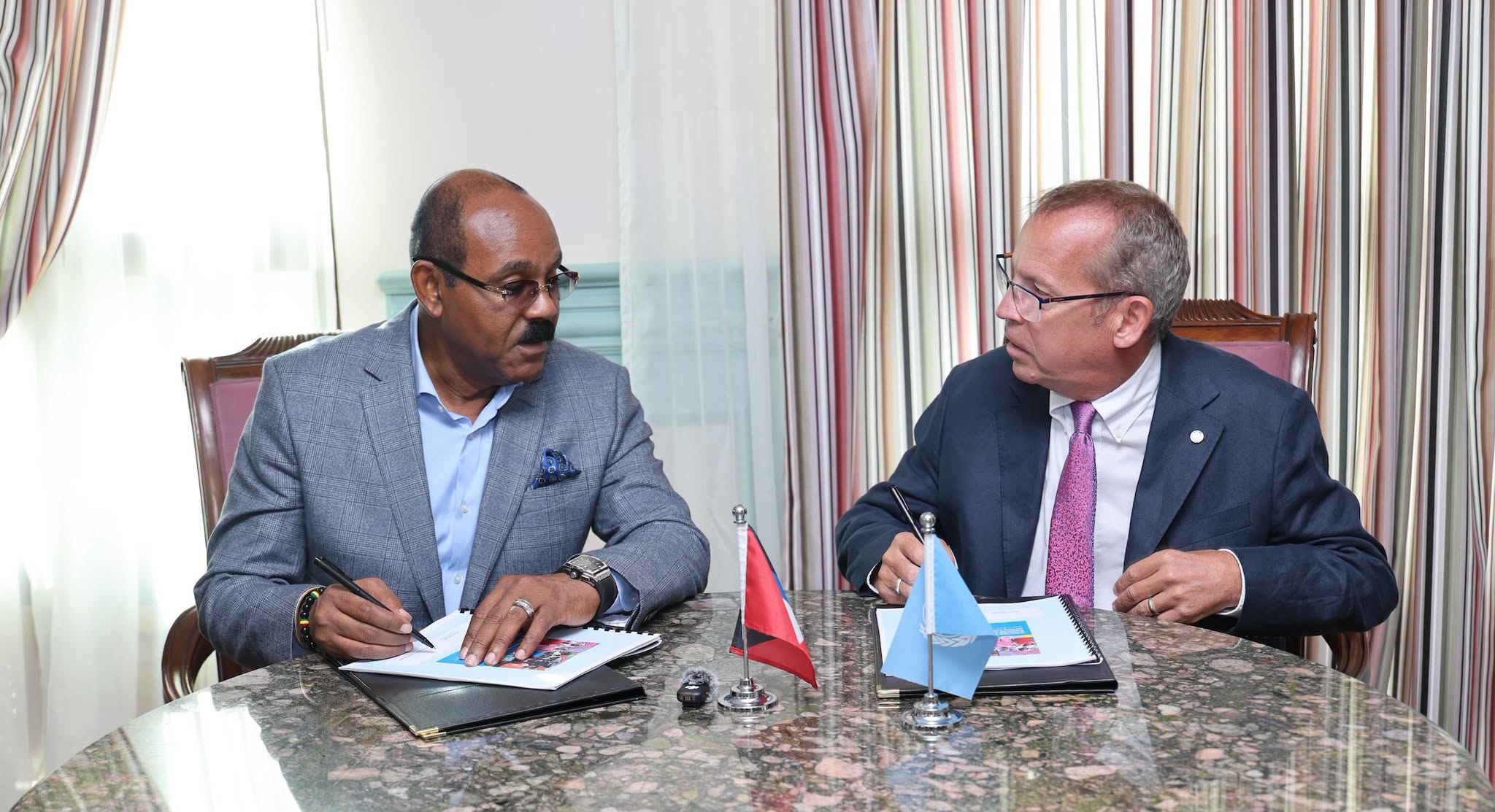
ST JOHN’S, Antigua and Barbuda — Antigua and Barbuda has become the first country in the Eastern Caribbean to endorse a United Nations development cooperation framework that will guide regional development efforts from 2027 to 2031.
Prime Minister Gaston Browne signed the UN Multi-Country Sustainable Development Cooperation Framework (MSDCF) on October 23 during a ceremony at his office, attended by Simon Springett, the UN Resident Coordinator for Barbados and the Eastern Caribbean.
The framework sets out how the UN development system will work with participating Eastern Caribbean countries to address national and regional priorities, including economic diversification, climate resilience, social protection and citizen security.
For Antigua and Barbuda, a key focus will be supporting the implementation of the Antigua and Barbuda Agenda for Small Island Developing States (ABAS 2024–2034). The 10-year agenda was adopted following the Fourth International Conference on Small Island Developing States, hosted by the country in May 2024.
The government said the framework would help coordinate development programmes, track results and strengthen accountability as the country works towards its sustainable development goals.
Developed through consultations with governments, civil society organisations and regional institutions, the MSDCF draws on regional and national development analyses to identify challenges shared by Caribbean small island states.
These include exposure to climate-related disasters, limited economic diversification, social inequalities and gaps in data collection and management. The framework also recognises financing constraints and fragmented institutions as obstacles to development across the region.
Through coordinated programmes, the UN framework aims to support more resilient economies, strengthen social protection and human capital, and improve regional capacity in areas such as digital infrastructure, data management and climate risk reduction.
Implementation will be overseen through governance and monitoring mechanisms, including a Joint Steering Committee, a Regional Steering Committee and individual Country Implementation Plans.
The government said Antigua and Barbuda’s endorsement reflects its commitment to working with the UN and securing technical expertise and institutional support for national development priorities.

Leave a Reply