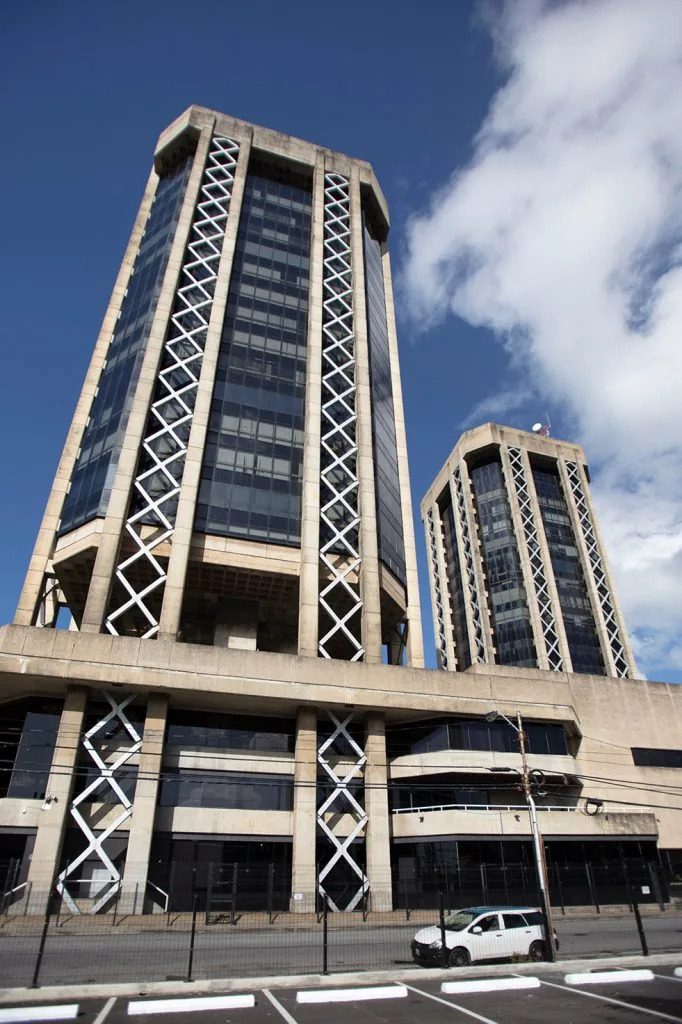
Trinidad and Tobago’s non-energy sector continued to lose momentum, even though there was higher natural gas production which provided a temporary lift to overall economic activity in 2025, according to the Central Bank’s December Monetary Policy report.
While energy output rebounded strongly in the second quarter of 2025, supported by first gas from bpTT’s Cypre and bpTT/EOG’s Mento fields, the Central Bank said several non-energy industries showed weaker performance, raising concerns about the sustainability of economic growth.
Data from the Ministry of Energy and Energy Industries showed energy sector output expanded by 10.4 per cent year-on-year in the second quarter, with natural gas production rising by 11.7 per cent and crude oil output increasing by 8.9 per cent. Petrochemical production also improved, with ammonia and urea output rising sharply, although methanol production continued to decline.
In contrast, the Central Bank reported that non-energy activity remained sluggish.
Key indicators pointed to softer conditions in the distribution, construction and manufacturing sectors, offsetting gains recorded in finance and utilities.
Inflation remained contained at the lower end of single digits.
Headline inflation slowed to 0.5 per cent year-on-year in November 2025, down from 1.5 per cent in June, with food inflation easing due to lower international prices and limited weather-related disruptions.
“Headline inflation, as measured by the Central Statistical Office’s Consumer Price Index, measured 0.5 per cent (year-on-year) in November 2025 compared with 1.5 per cent in June 2025. Core inflation (which excludes food prices) rose by 0.5 per cent while food inflation decelerated to 0.8 per cent, pulled down by lower international food prices and few weather-related disruptions to domestic agricultural supplies,” the bank reported.
Financial conditions showed mixed signals. While liquidity in the banking system improved, private sector credit growth slowed.
Business credit expansion moderated significantly, while consumer lending also eased, reflecting lower demand for credit cards, vehicle loans and bridging finance.
With these conditions in mind, the Central Bank’s Monetary Policy Committee (MPC) said economic growth remains tentative, warning that gains from higher energy production could be partially offset by weakening non-energy activity. The committee noted that the domestic economy still requires support to achieve a sustained recovery.
As a result, the MPC decided to maintain the repo rate at 3.50 per cent, citing low inflation, slowing non-energy activity and a narrowing interest rate differential with the United States.
The committee said it will continue to monitor credit growth, wage increases and pressures on foreign reserves ahead of its next policy announcement scheduled for March 27, 2026.



Leave a Reply