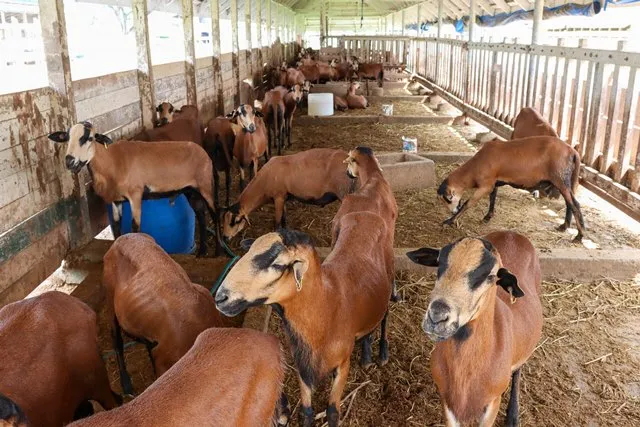
Guyana says it is continuing efforts to strengthen its livestock sector through the expansion of its Black Belly Sheep Programme, which officials say has boosted local production and reduced dependence on imports.
Agriculture Minister Zulfikar Mustapha said the initiative has recorded significant growth since its launch, with Guyana’s Black Belly sheep population increasing from an initial 1,000 animals imported from Barbados to more than 3,000 today.
Speaking in an interview with Guyana’s Department of Public Information (DPI), Mustapha said the programme is now focusing on cross-breeding local sheep while helping farmers establish and expand their own flocks.
According to the minister, more than 500 farmers across Guyana have already benefited through the distribution of breeding rams and other forms of support.
“The Black Belly Sheep programme has been a success. We have received from Barbados 1,000 Black Belly sheep and today we have just over 3,000 in the system. Over 500 farmers have benefited and have started their own flocks,” Mustapha said.
The minister said the government’s wider livestock development strategy is aimed at reducing imports while increasing domestic production capacity.
Mustapha also highlighted additional interventions being introduced in the sector, including artificial insemination and embryo transfer technology.
“For the first time in our history, we are undertaking embryo transfer to improve productivity, and we will soon import 1,000 pregnant heifers to boost beef and dairy production,” he said.
The agriculture minister pointed to growing private sector involvement in the industry, including a dairy investment by Demerara Distillers Limited (DDL) in partnership with an Israeli company.
He also noted that local farmers in Region Five have established a pasteurised meat plant as part of efforts to modernise livestock production.
According to Mustapha, the combination of government initiatives and private investment is expected to significantly transform Guyana’s livestock industry and strengthen national food production.
Leave a Reply