Saint Vincent and the Grenadines is turning to new farming technology as part of efforts to strengthen local food production and help farmers adapt to the growing effects of climate change.
A new hydroponic demonstration facility has been established at the Orange Hill Agricultural Station through a partnership between the Ministry of Agriculture and the Food and Agriculture Organization of the United Nations(FAO).
The facility, which became operational on June 9, features a Nutrient Film Technique (NFT) hydroponic system that allows vegetables to be grown using a continuous flow of water and nutrients delivered directly to plant roots.
Officials say the technology can help farmers produce crops more efficiently by reducing water use, limiting fertilizer waste and allowing vegetables to be grown in a controlled environment.
Permanent Secretary in the Ministry of Agriculture Colville King said the project comes at a time when farmers are facing increasing challenges linked to climate change.
He said investing in technologies such as hydroponics can help strengthen the country’s ability to produce food locally while making better use of limited resources.
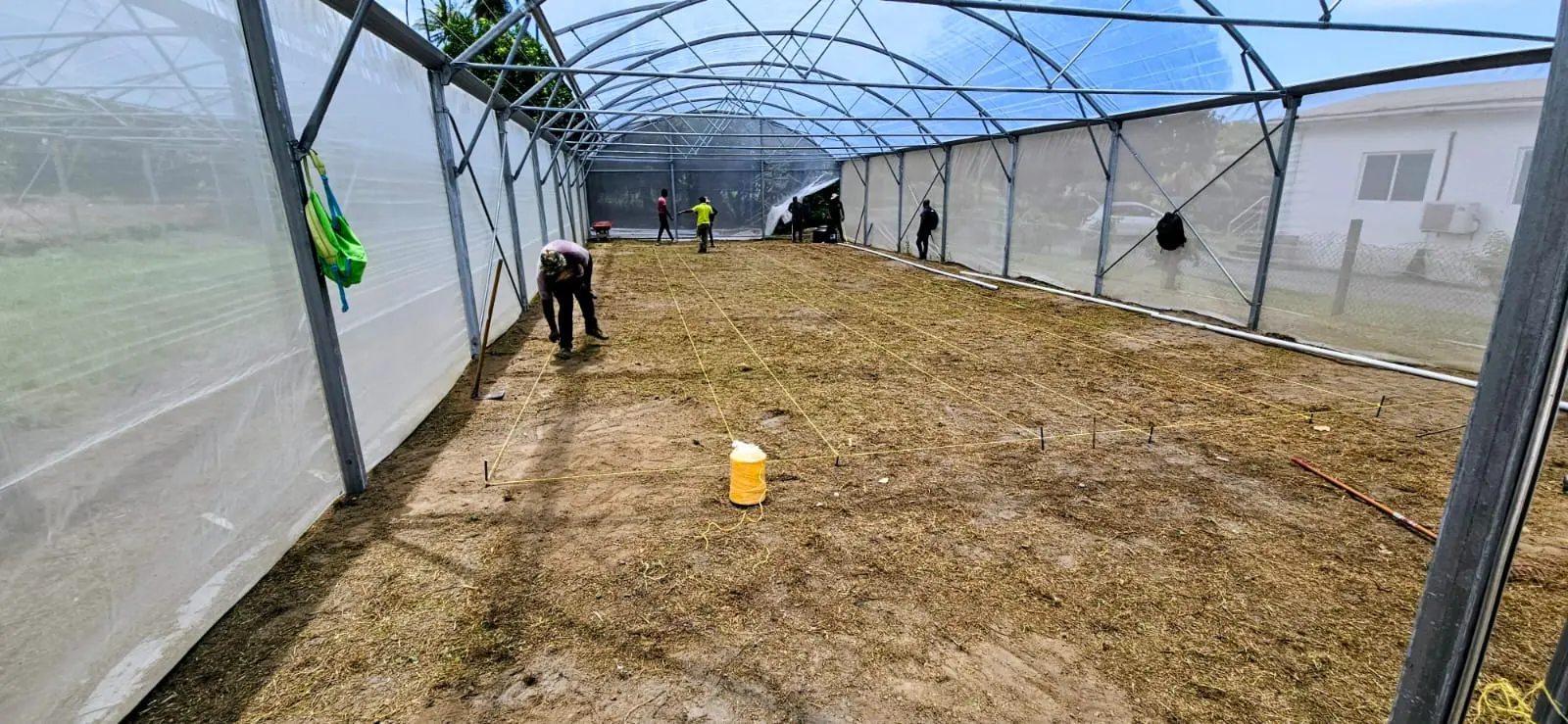
The system is located inside a 34-foot by 80-foot greenhouse at the Orange Hill Agricultural Station, which was built using locally available materials and designed to withstand strong winds. The facility is also powered partly by solar energy.
The greenhouse will serve as a training and demonstration space, allowing farmers, agriculture technicians, students and young entrepreneurs to gain practical experience in protected agriculture.
FAO Lead Technical Officer Juan Cheaz said the goal is not only to increase production but also to help farmers tap into higher-value markets.
He noted that improving local vegetable production could create opportunities to supply sectors such as tourism, where demand for fresh, locally grown produce continues to increase.
The facility was established during a FAO technical mission from June 1–9, 2026, under the project “Building Effective Public-Private Partnerships for Production and Marketing of Sustainable Agricultural Products.”
As part of the initiative, 57 participants took part in training focused on managing nutrients in hydroponic systems, including how to prepare fertilizer solutions and improve crop yields.
Participants included Ministry of Agriculture technicians, farmers, students from the Saint Vincent and the Grenadines Community College and young people interested in agricultural entrepreneurship.
FAO Protected Agriculture Specialist Jervis Rowe said hydroponic systems like NFT allow producers to grow more crops in smaller spaces while improving consistency and reducing the amount of water and fertilizer required.
Project Coordinator Jefferson Jaikissoon said the facility is a starting point for building local expertise in protected agriculture.
He added that a second NFT system using imported components will be introduced during the next phase of the project, allowing officials to compare different methods and identify solutions that work best under local conditions.
The initiative forms part of wider efforts by Saint Vincent and the Grenadines to improve food security and develop more resilient farming practices.

Leave a Reply