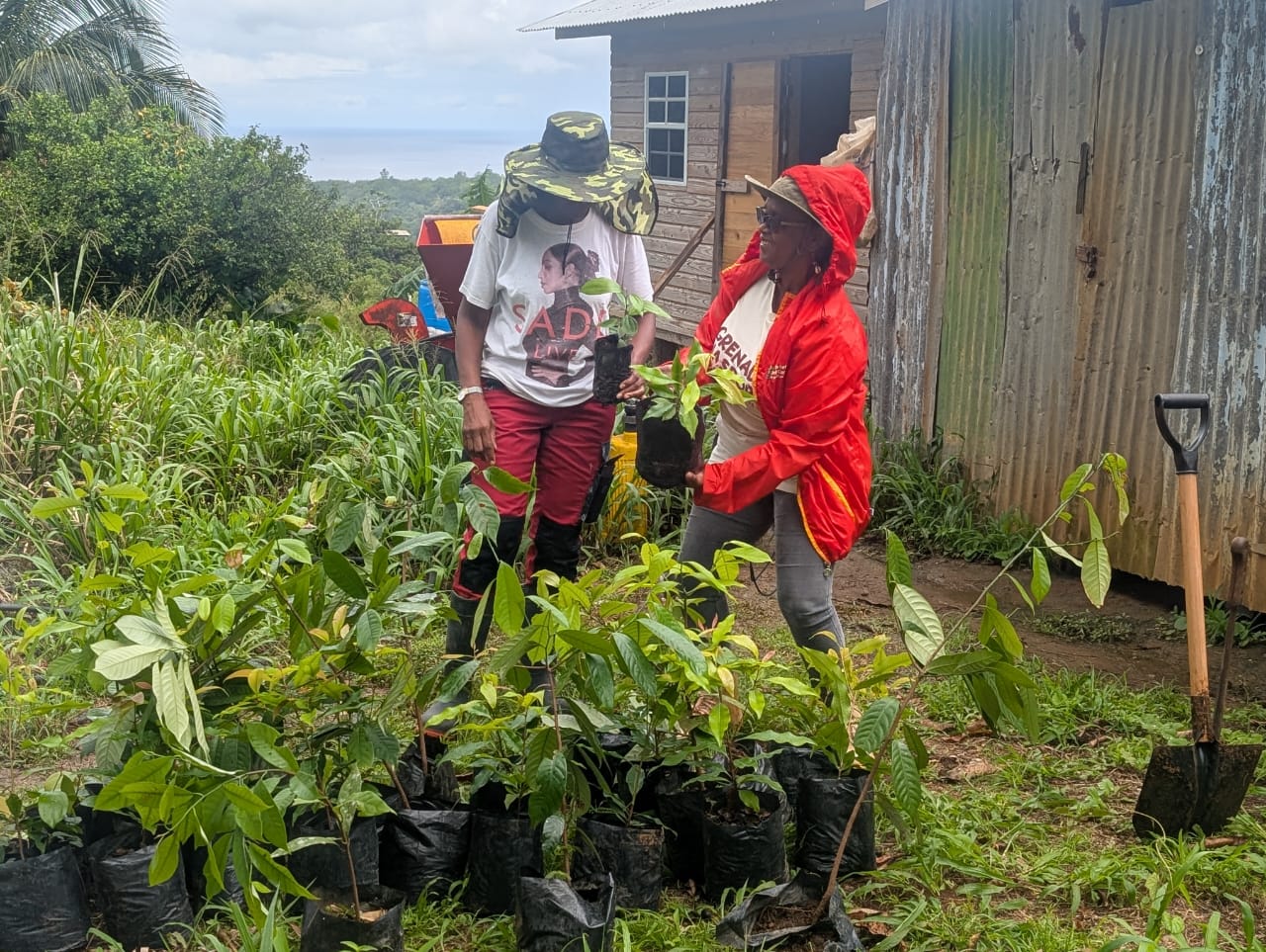
The only trees that are standing tall around Evans Gooding’s estate, which covers just about eight to 10 acres in the fertile hills of Granton, are the windbreakers—a testimony to the ancestral wisdom of his parents and grandparents.
They were planted to protect the nutmeg, cinnamon, bay leaf, and other spice trees that flourished throughout the hilly terrain of Grenada, the Spice Isle of the Caribbean.
When Hurricane Ivan landed with catastrophic, tornadic winds in September 2004, it wiped out almost 85 per cent of spice trees on the island, which was one of the world’s largest nutmeg producers.
It was an emotional and economic heartbreak that was compounded 10 months later in July 2005, when Hurricane Emily inflicted more pain and prolonged the hardship, uprooting the seedlings that were replanted. But the nutmeg continued to occupy pride of place on the Grenada flag.
Now, 18 years later, there is a structured and aggressive push to plant 100,000 nutmeg, cinnamon, and bay leaf trees in a “Roots to Legacy” initiative that was launched as the National Spice Replanting Programme in 2022.

Gooding’s legacy, inherited from his grandparents, is bound to his grandchildren sharing his commitment to remain tied to the earth.
Good Times Farm was one of the sites chosen for the National Spice Planting Day on Sunday as part of the Diaspora Homecoming.
“I am planting here, and my children will never sell here; it would be in my will,” he said defiantly, declaring his intention to make his legacy legally watertight.
“They cannot take it to the bank for investment either, and must use it for agriculture,” Gooding told Caribbean Pulse on Sunday morning.
“I lost basically everything from Ivan.”
And while the country had been resilient, he started inter-cropping, planting root crops and vegetables, while the island’s Ministry of Agriculture began the painstakingly long process of propagating nutmeg plants after most seed-bearing “mother trees” had been destroyed in the hurricane.
Distribution of these seedlings began for registered farmers in small batches in various parishes between 2011 and 2021 as part of the process to rebuild the island’s main export crop and its reputation.
“We are getting a hundred thousand spice trees in the ground to reflect the island’s population. It’s like one tree for each citizen,” Randall Dolland, Chairman of the Grenada Tourism Authority (GTA), said on Sunday morning when some of the Grenada diaspora, like Meena Gay, who returned for the Homecoming event, put their hands in the soil at Gooding’s estate for the replanting on Sunday.
“Essentially, this is the biggest “voluntourism” or volunteerism project in the country right now, with the largest mobilisation of spice planting in the history of Grenada,” he said, while people were out in the island’s other parishes, also planting spice trees, to make up for the 40,000 that should have been in the soil by Sunday afternoon.

“We all have a vested interest in this because our agricultural sector is very important and sometimes we don’t pay as much attention to it, so it’s important that we are intentional about it and get more hands-on,” Dolland said, acknowledging the farmers are doing “a phenomenal job.”
“But,” he continued, “we want to do this together because the Spice Island is ours, so it’s a Grenadian thing, and we want to make sure that collectively, we’re all behind it. I think as we continue, the message will start resonating more and more with the wider population, and then eventually we will get to the point where more people will get involved.”
“We will continue to roll this out and we’re gonna go to schools, to the companies, where they can use a “volunteer day” as an occasion to give back, and even introduce “voluntourism” at the hotels,” he said, revealing his commitment to replant.
Gooding is on his own mission, as he insists that besides what the government is saying, he is “doing spices.”
“My parents had nutmeg and the hurricane mashed it down and I am planting back the spice. But it’s not for me now, but for my children,” he ended with a knowing smile, undaunted by the memory of 2004. “From the first breeze the nutmegs went, because they have naturally shallow root systems,” he said.
“We can’t continually call ourselves the isle of spice when we are not planting spices,” Gooding mused, as he shrugged his shoulders at the thought of another hurricane, like Beryl, which passed over in 2024.
“It’s just an act of God and we have to deal with it as it comes and plant smart,” Gooding said.
The Chairman of the Grenada Tourism Authority, Randall Dolland, knows that spices are the literal DNA of the island’s tourism identity, hence his aggressive replanting push.

Leave a Reply