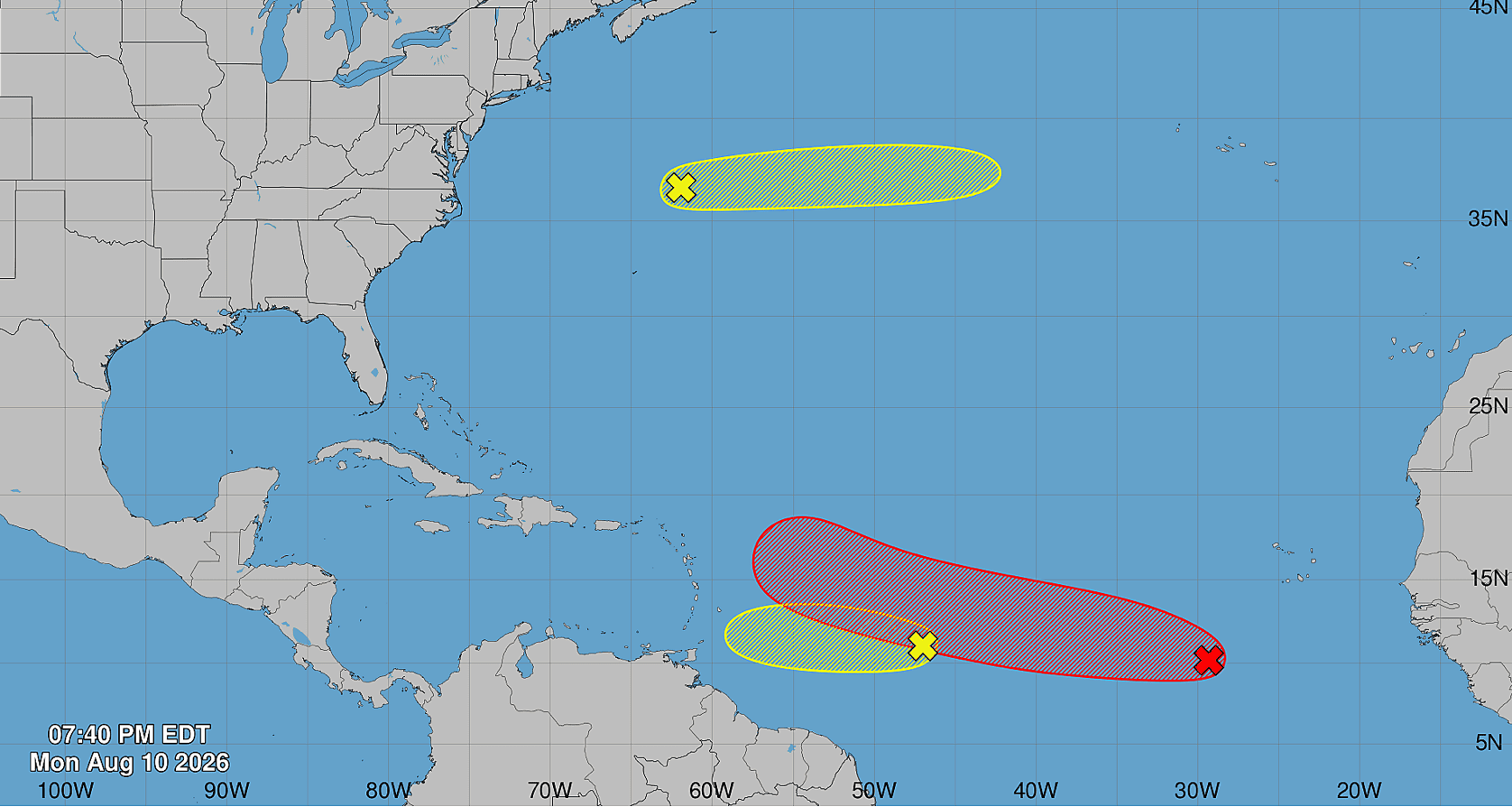
The tropical Atlantic is becoming more active, with three areas of weather being monitored by forecasters for possible development.
The area attracting the most attention is a low-pressure system located about 500 miles southwest of the Cape Verde Islands and producing a large area of showers and thunderstorms.
The US National Hurricane Center (NHC) said conditions are expected to gradually become more favourable for development over the next day or two.
The system could become a tropical depression during the latter half of this week as it moves westward to west-northwestward across the central tropical Atlantic.
If it develops, it would become the third tropical depression of the 2026 Atlantic hurricane season.
Another area of interest is a tropical wave located about 900 miles east of the Windward Islands, producing disorganised showers and thunderstorms.
The NHC said some gradual development is possible through midweek as the system moves quickly westward across the central tropical Atlantic. However, conditions are expected to become less favourable later this week as the system approaches the Lesser Antilles.
The NHC currently gives the system a 10 per cent chance of development over the next seven days.
Meanwhile, a trough of low pressure a few hundred miles northeast of Bermuda is producing a small area of showers and thunderstorms in the central subtropical Atlantic.
Some development is possible over the next couple of days as the system moves quickly eastward. However, the NHC expects it to reach cooler waters later this week, ending its chances of formation by Thursday.
Despite the increased activity, conditions across the Atlantic could make development difficult.
A strong and intensifying El Niño is contributing to increased wind shear across parts of the Caribbean and eastern Atlantic.
Colorado State University tropical scientist Phil Klotzbach has described the current wind shear in the region as the strongest on record.
The southern systems could therefore face significant wind shear if they move far enough west toward the Lesser Antilles.
Dry air could also pose another obstacle to their development.

Leave a Reply